
News
CASTED Attended the Sixth Annual Meeting of the Science, Technology, Engineering and Innovation Policy Asia and the Pacific Network (STEPAN) in Indone
2026-09-11
From August 31 to September 1, 2026, representatives of Chinese Academy of Science and Technology for Development (CASTED) attended the Sixth Annual Meeting of the Science, Technology, Engineering and Innovation Policy Asia and the Pacific Network (STEPAN) in Jakarta, Indonesia, as China’s National Focal Point Representative. The meeting was organized by the UNESCO Jakarta Office, which serves as the STEPAN Secretariat. National Focal Point Representatives from 14 member states, including China, the Republic of Korea, Indonesia, Malaysia, Iran and the Philippines participated in the meeting.
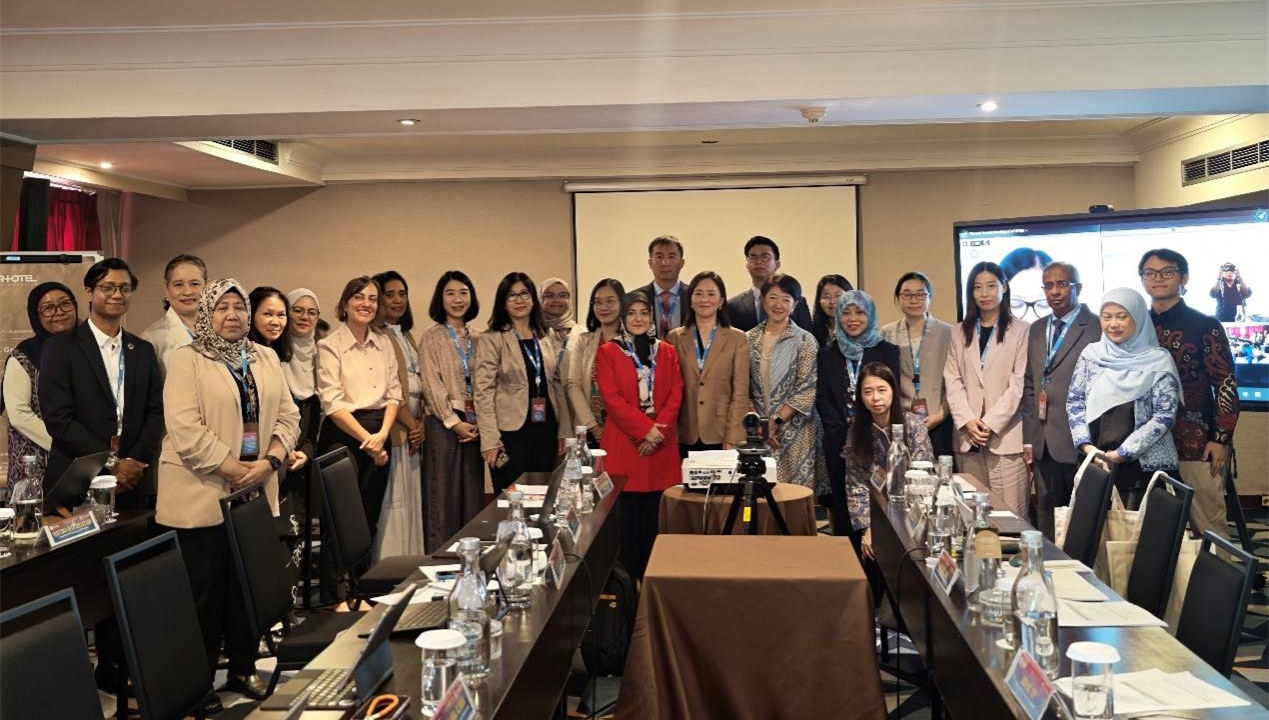
During the country report session, CASTED representative delivered a report titled “China’s National Science, Technology and Innovation Governance System and Key Measures in Support of the STEPAN Action Plan.” The report introduced China’s progress in science, technology and innovation (STI) across four dimensions, covering innovation actors, innovation resources, innovation organization, and innovation environment. It also shared the concrete measures CASTED has taken to align with the STEPAN 2026--2030 Action Plan. During the exchange session, CASTED discussed with the participating countries about issues such as the STI governance in the Asia-Pacific, artificial intelligence governance, and STI oriented social development, unlocked the potential for future cooperation, and laid a foundation for continuing to promote the construction of the STI think tanks of the Belt and Road partner countries.
STEPAN was originally established in 1988 and was relaunched in 2021 by the UNESCO Jakarta Office. It is the UNESCO’s official platform for promoting STI policy coordination and capacity-building in the Asia-pacific region. It currently has 21 member states. The annual meeting focuses on implementing the STEPAN 2026--2030 Action Plan, aiming to share national and regional progress and achievements, promote the exchange of knowledge and experience among member states, and discuss and plan prior activities in the three core areas for 2027.

Contact us
 No.8 Yuyuantan South Road, Haidian District, Beijing, 100038
 +8610 58884695 58884506
 +8610 58884678 58884588
 casted@casted.org.cn
 http://www.casted.org.cn
Chinese Academy of Science and Technology for Development All rights reserved. Support by ZhongYan